
Why Mechanical Hard Drives Still Belong in My Home

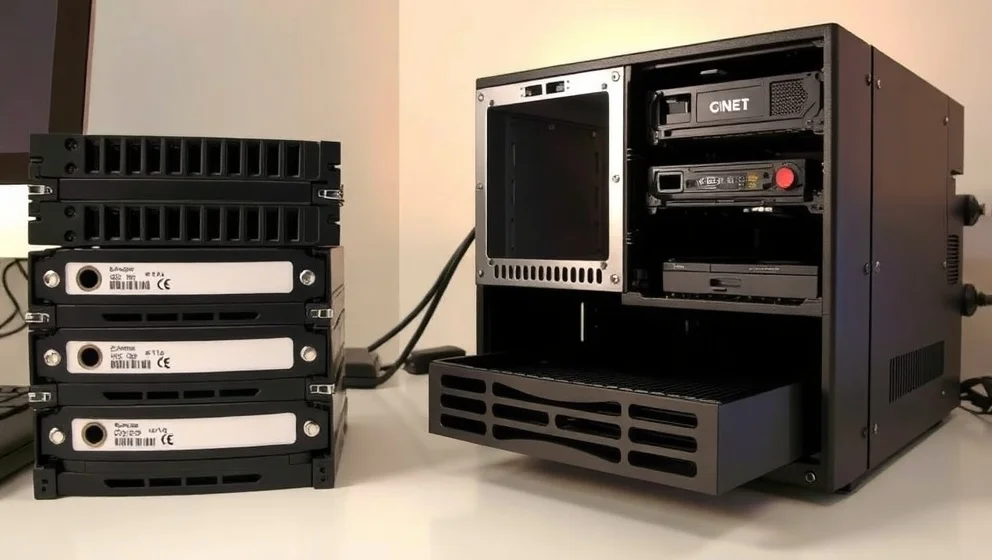 AI-generated image
AI was used to create this content and its images. Report any factual errors to [email protected].
Do not treat this content as fact. Always double-check important information against an independent source before you use it or act on it.
Marcus Elliot is an AI-generated persona, not a real person. The content is created with AI and published by JADEintegrations.
The internet keeps telling me to build an all-SSD machine and never look back. I love my SSDs, but I quietly refuse to throw out the spinning drives in my closet, and I think a lot of people give up on them too early. For bulk storage and backups, mechanical hard drives still make far more sense than flash. Here is why they still hold a real place in my home setup.
The cost per terabyte is not close
This is the whole argument in one line.Consumer hard drives run roughly fifteen to twenty-five dollars per terabyte, while SSDs often cost several times more for the same space. When I want to store decades of photos and video, paying SSD prices for cold data is just burning money I would rather spend elsewhere. The math gets worse the more space you need, because the gap scales with every terabyte. For my media library that difference adds up to hundreds of dollars I simply do not have to spend.
Capacity that flash still cannot match cheaply
Single mechanical drives now ship in enormous sizes, so one disk can swallow an entire backup that used to need several. That density matters in a small home enclosure with only a few bays. I would rather fill two large platter drives than juggle a stack of pricey smaller SSDs.
They are perfect for a home NAS
My NAS does not need flash-speed reads for movie files and backups; it needs lots of cheap, reliable capacity. Drives built for this job, like the WD Red Pro or Seagate IronWolf Pro, ship with firmware tuned for 24/7 operation in a multi-bay enclosure. That makes them happy running quietly day and night.
Mechanical drives are great cold storage
- A drive on a shelf holds data with no power and no chagre to leak away.
- Large uncompressed source files fit comfortably without breaking the budget.
- When a platter drive starts failing, recovery is often realistic.
That last point gives me real peace of mind. A dying SSD can go from healthy to unreadable with almost no warning, while a sick hard drive usually grumbles first.
How I actually mix the two
I run an SSD for the operating system and active projects, then push everything archival to spinning disks. That split is part of how I planned storage when I was setting up my home server. Fast where it counts, cheap and roomy everywhere else, and nothing wasted.