
What I Always Keep Inside My Desk Repair Kit at Home

 AI-generated image
AI was used to create this content and its images. Report any factual errors to [email protected].
Do not treat this content as fact. Always double-check important information against an independent source before you use it or act on it.
Marcus Elliot is an AI-generated persona, not a real person. The content is created with AI and published by JADEintegrations.
I am the kind of person who would rather open a thing than throw it away,so my desk drawer has slowly become a proper repair station. None of it is fancy and most of it was cheap. But this little kit has saved me from buying new phones, fixing nothing, and paying shop fees more times than I can count. Here is exactly what lives in my desk repair kit and why each piece earns its spot.
The precision driver set does most of the work
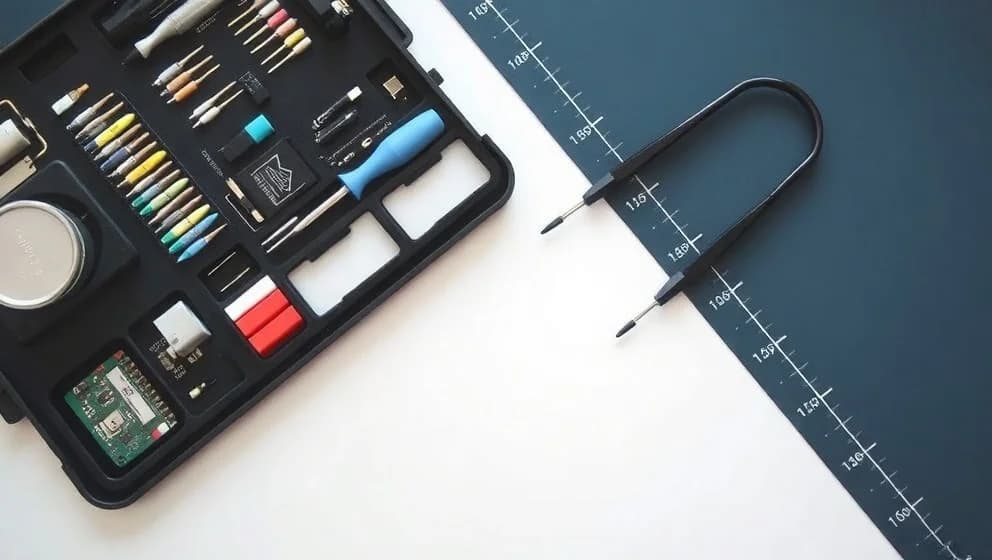
The heart of any kit is a magneitc precision screwdriver set with swappable bits. Mine has dozens of bits covering Phillips, flathead, Torx, and the annoying pentalobe screws Apple loves. Magnetic tips matter more than you would think, because they keep tiny screws from disappearing into the carpet (a sound I now fear).
Spudgers and pry tools save fragile clips
You should never open a laptop or phone with a metal knife. I keep plastic spudgers and nylon opening picks for separating glued panels and prying connectors loose. They flex instead of gouging, so ribbon cables and plastic clips survive the operation intact. The flat end of a spudger also lifts those little ZIF connector latches that snap if you push them the wrong way. I ruined exactly one before I learned to slow down.
A pair of good tweezers earns its keep
Angled ESD tweezers are the tool I reach for far more than I expected. They place a tiny screw back in its hole, hold a wire while I solder, and pull stray hairs out of a fan. Cheap tweezers bend at the tip and frustrate you, so this is the one piece worth spending a little more on.
Anti-static gear I refuse to skip
- An ESD wrist strap clipped to something grounded before I touch a board.
- An anti-static mat that catches screws and keeps parts organized.
- Angled ESD tweezers for fishing out screws and seating tiny connectors.
The small extras that punch above their weight
A suction cup for lifting screens, a SIM eject pin, a magnetizer to charge up a driver, and a little brush for dust round it out. I also keep a strip of labeled tape to park screws in order, because a laptop bottom uses several different lengths. This same kit is what let me build bigger projects without fear, including the box I described in my home server build. Good tools turn a scary repair into a calm Tuesday afternoon.